Utility Trenching & Retaining Walls in Napa Valley
What Property Owners, Vineyards & Developers Need to Know
From the rolling hills of wine country to the densely developed areas of Downtown Napa, utility trenching and retaining wall construction are fundamental components of nearly every residential, commercial, and agricultural project in Napa Valley.
At Pridmore Construction, we specialize in excavation and structural solutions tailored to the challenges of Napa Valley’s steep terrain, clay-rich soils, hillside vineyards, and strict county building requirements.
Whether you’re preparing a new winery site, upgrading utilities on rural acreage, or stabilizing a hillside homesite, this guide explains what Napa property owners need to know about these essential construction services.
Utility Trenching in Napa Valley
Utility trenching is required for installing underground systems such as:
Water service and irrigation lines (especially important for vineyards)
Sewer or septic connections
PG&E electrical conduit
Gas lines
Fiber-optic and telecom lines
Drainage lines for hillside runoff
In Napa Valley, trenching must account for hilly terrain, rocky soils, and high groundwater levels in certain seasons. These environmental conditions make professional trenching especially important.

Why Professional Utility Trenching is So Important in Napa Valley
1. Compliance With Napa County Regulations
Napa County has strict requirements for excavation near:
Hillside roads
Creeks and watershed areas
Agricultural zones
Existing winery infrastructure
Proper permitting and utility locating (USA 811) are mandatory, especially on older vineyard parcels where utilities may be undocumented.
2. Soil Conditions Unique to Napa Valley
Across Napa Valley, trenching conditions vary widely:
Oak Knoll & Yountville: soft, loamy soil
St. Helena & Calistoga: rocky, volcanic terrain
Atlas Peak & Coombsville: heavy clay with basalt rock layers
Pridmore Construction is experienced with all Napa soil profiles, choosing the right equipment and trench depth to ensure stability and prevent collapses.
3. Protecting Vineyards and Irrigation Systems
Many Napa Valley trenching projects must navigate:
Drip irrigation systems
Vineyard rows
Trellis posts
Agricultural water storage tanks
We complete trenching with minimal disruption to crops and infrastructure, crucial for vineyard operations.
Retaining Walls in Napa Valley
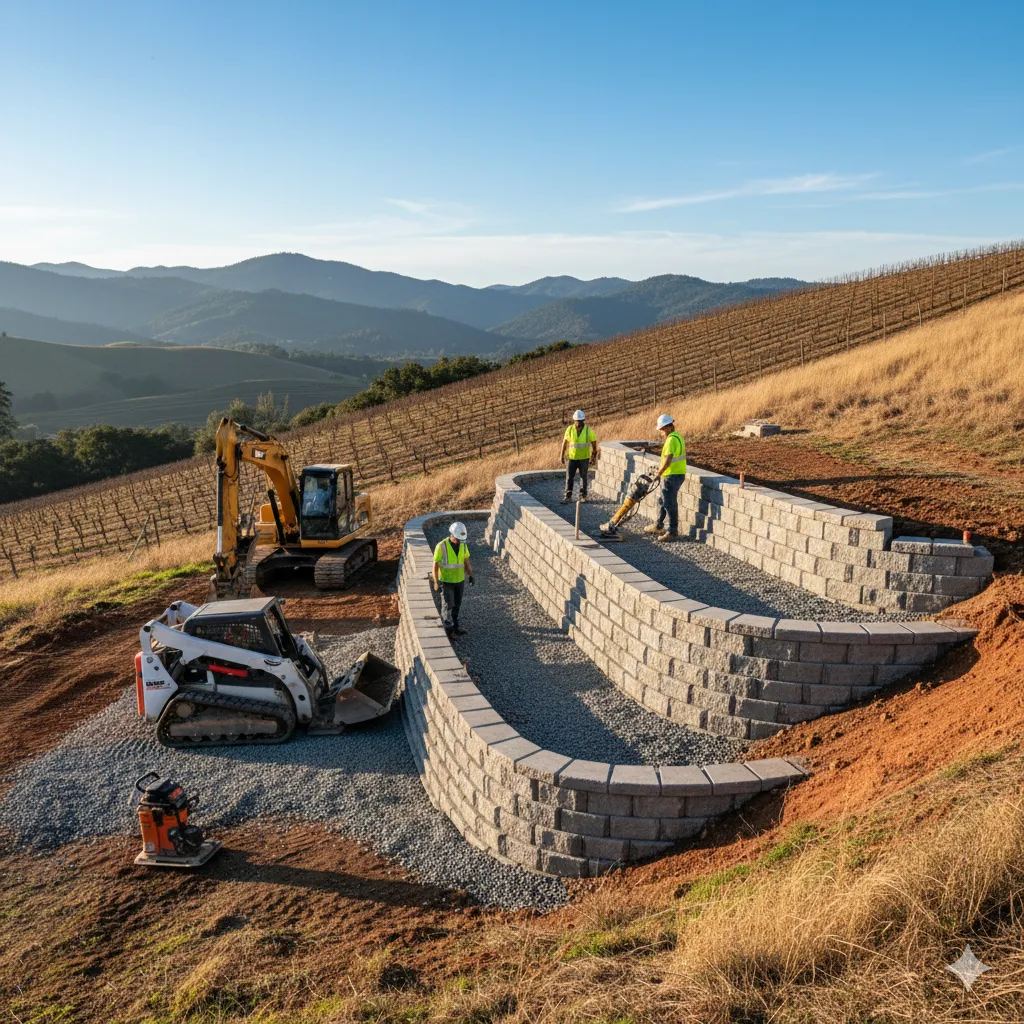
Napa Valley’s dramatic slopes and rolling wine country landscapes make retaining walls essential for preventing erosion, creating buildable pads, and stabilizing terrain around homes, driveways, tasting rooms, production buildings, and hillside vineyards.
Common retaining wall applications include:
Winery building sites
Residential hillside lots
Driveway and access road stabilization
Vineyard terrace walls
Erosion control near creek beds
Hillside grading for new construction
Challenges of Building Retaining Walls in Napa Valley
1. Steep Hillsides & Elevation Changes
Areas like Mount Veeder, Howell Mountain, and Atlas Peak require engineered retaining systems to prevent slope failures, especially during winter rainstorms.
2. Local Drainage Requirements
Napa County requires proper drainage systems, such as French drains, weep holes, or perforated pipe behind retaining walls.
This prevents water pressure buildup, a common cause of wall failure in wine country’s clay-heavy soils.
3. Earthquake Readiness
Napa is a seismically active region. Retaining walls here must be reinforced to withstand lateral movement caused by:
Micro-quakes
Soil settlement
Expansive clay soil shifting
Pridmore Construction builds retaining walls that meet or exceed seismic requirements.
4. Vineyard Terrain
Many vineyard properties require terracing with:
Rock walls
Boulder walls
Engineered block retaining systems
These allow safe tractor access, protect root systems, and optimize water flow.
How Utility Trenching & Retaining Walls Work Together on Napa Valley Projects
Many Napa Valley properties, especially vineyards and hillside homes, require both services during development:
Utility trenches often run behind or beneath retaining walls
Drainage lines installed in trenches help reduce hillside erosion
Retaining walls create stable pads for septic systems, water tanks, and electrical infrastructure
Construction sequencing is critical to prevent soil collapse during the rainy season
Pridmore Construction manages all sitework elements so your project remains stable, compliant, and on schedule.
Frequently Asked Questions (Napa Valley Edition)
1. Do I need a permit for trenching or retaining walls in Napa County?
Yes. Napa County requires permits for most:
Utility trenching
Grade-and-fill operations
Retaining walls over 3–4 feet
Work near creek zones or agricultural preserve areas
We assist with county permitting and inspections.
2. What retaining wall type works best in Napa Valley?
Given the terrain and seismic requirements, the most reliable options are:
Engineered concrete block
Poured concrete walls
Rock or boulder walls (popular for vineyards)
3. What is the best time of year for trenching in Napa?
The dry season (late spring through early fall) is ideal, as Napa’s winter rains can cause trench flooding or soil collapse.
4. Can retaining walls help prevent erosion near vineyards?
Absolutely, retaining walls are one of the most effective ways to protect hillside vineyard rows and maintain structural integrity after heavy rains.
Why Napa Valley Chooses Pridmore Construction
Expertise with Napa County soils, slopes, and regulations
Skilled heavy-equipment operators experienced in hillside work
Engineered retaining wall construction
Vineyard-friendly trenching with careful irrigation protection
Full-site preparation for residential, commercial, and winery projects
Compliance with all county, state, and seismic requirements
Whether you’re leveling a hillside, expanding a winery, preparing a homesite, or upgrading utility infrastructure, Pridmore Construction delivers precision, safety, and long-term stability on every Napa Valley project.


